About Project IE 4K ( PIE4K )
Project IE 4K, or PIE4K, is about taking the classic Infinity Engine games—Baldur’s Gate, Icewind Dale, and others—and pushing them far beyond their original limits.
The goal isn’t just to produce high-quality 2K and 4K assets. It’s to make these worlds feel new again, expand what the engine can do, and explore ideas that simply weren’t possible when the games were originally built.
PIE4K uses a modular service and plugin architecture that makes it easy to add new tools, AI-powered enhancements, and entirely new capabilities while keeping the original games and assets at the core.
And this is only the beginning. More is coming soon.
Current Status
Most image-centric file types are fully processed (extract, upscale, assemble). Some logic-heavy or metadata-centric formats (e.g. BCS scripting, KEY editing) still need refinement. Engine adjustments (GemRB fork) are underway to implement zoom and proper UpScaleFactor scaling for actors, projectiles, overlays, and UI elements.
Engine Modifications
Zoom + scale logic ~70–95% implemented in a dedicated GemRB fork pending upstream PR viability.
Service System
Uniform lifecycle & resource tracking (CPU / RAM / GPU / VRAM) with VRAM-aware tiling for upscaling.
Future
Planned diffusion-based asset generation, multi‑GPU workload distribution, richer configuration semantics.
Usage
- Clone and build the project (or download a release once available).
- Run the binary to inspect commands:
./install/bin/pie4k - Execute a full pipeline:
./install/bin/pie4k batch complete -c demo-reference.cfg - Launch GemRB with generated override:
gemrb -c demo-x4.cfg
All output assets are written to an output/ directory. Original game files and override contents remain untouched.
Supported Platforms & Hardware
OS
- Linux (primary dev)
- Windows (tested via MSYS2)
- macOS (not yet tested)
GPU
Nvidia / AMD / Intel via Vulkan + NCNN. VRAM adaptive tile sizing avoids OOM while maximizing throughput.
System
Recommended: GPU w/ ≥8 GB VRAM, 8+ cores CPU, 32 GB RAM for large full-game batches (swap advisable).
Build Summary
Linux
Install compiler + dependencies (gcc, cmake, vulkan headers, SDL2, gtest, vlc, ninja, etc.). Ensure proper GPU stack (libnvidia-ml, AMD libs, or Intel Level Zero).
./compile.sh
Windows (MSYS2)
Install mingw-w64 toolchain + SDL2, vulkan headers, gtest, vlc, etc. CUDA / ADLX / Level Zero for vendor support.
./compile.sh
Build currently bundles: pie4k core, GemRB fork (modified), and NCNN.
Roadmap Highlights
Rules System
Baseline skipping logic active (≈30%)—expanding for conditional workflows.
Resume Operations
~80% complete; force override supported with --force.
Multi-GPU
Planned: distribute tiles / resource classes across devices.
Config Expansion
More alpha / color / model tuning options forthcoming.
Diffusion / New AI
Future service: model loading (safetensors) + conditional generation flow.
Full File Type Progress
Model Comparison Gallery
Sample outputs across different upscaling models. Click any thumbnail for full size.
Full extended gallery remains in the repository README.
Concept Vision
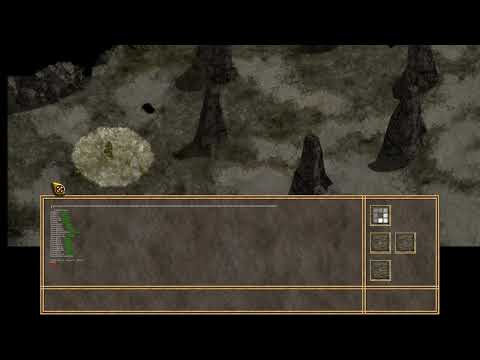
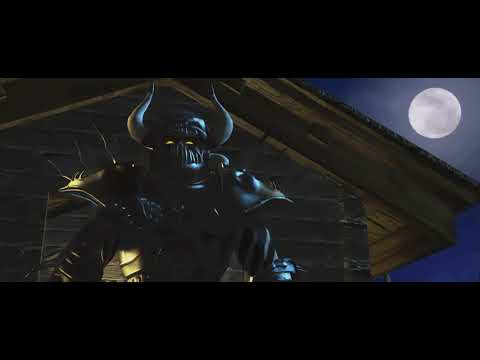
Beyond pure upscaling, the long-term aim is style transformation and artistic reinterpretation—producing cohesive alternative visual themes (e.g. ultra‑realistic, anime, painterly) while preserving mechanical integrity.


Credits & Thanks
- IESDP – indispensable reference: iesdp docs
- GemRB – engine insight & code inspiration: gemrb.org
- Near Infinity – cross‑validation & tooling inspiration: repo
- NCNN – Vulkan inference backend: github.com/Tencent/ncnn
- Model Developers – curated upscaling models: upscayl models
License
Project code is under GNU GPLv3 unless otherwise noted. Third‑party model licenses remain their own.